Sunday, July 22, 2018

SIMPLIFY YOUR LIFE


Such a familiar phrase isn't it--Simplify Your Life.  Sounds easy.  But is it?    (Post:  "Make Your Life a Little Easier, Especially in Your Head") I read an article about waiting.  Waiting for a better job, for a new person in our life, to be a parent or grandparent, for our children to grow up, for a health issue to resolve, for more time, or more money, for the right moment. . . something.  We're on hold waiting for a better future.  We're uncertain and some experts say uncertainty can make us feel anxious.  Our life doesn't seem simple at all. 

Uncertainty about the most important things in life can be devastating. Uncertainty caused by health or money problems, by disloyalty or by someone we trusted deceiving us, by mental illness playing havoc in our family. By something unexpected and devastating. A shock.  Such life-altering events are difficult to get past, even when we work hard at it. Even when we pray.


One way to simplify, according to experts, is to let go of anger.  We've all had to do that in our lives.  When someone has wronged us and refuses to admit it, the Bible says to abandon rage and anger (Psalm 37:8).  This is not forgiveness or reconciliation. Rather, being consumed by anger is not good for us.  By letting go we are healing ourselves, trusting that the pain will lessen with time.  

Another way to simplify is to forgive.  Not condone, not pretend an offense never happened; not allow ourselves to be fooled or taken advantage of; not pardon someone who tells us they've done nothing wrong when we know they have.  No.  Forgiveness is different than that. Forgiveness arises out of the unselfishness of love.  With forgiveness we accept the apology, we welcome the change.  1 Corinthians 13: 4-5 says that love does not keep account of injury.  We cancel the debt.  This is in the Lord's Prayer.  


How does this simplify our life?  Studies show that people who abandon anger or who forgive themselves and others are happier and healthier than those who hold on to hostility.  When we abandon anger or forgive we become more optimistic, our heart rates improve, our well-being is heightened.  So says the  Director of Stanford University Forgiveness Project Dr. Fred Luskin (www.curablehealth.com).  Forgiveness is an ancient tradition.  We can even forgive those who are long gone. Our parents.  The bullies from high school.  Forgiveness and anger abandonment are now taught as part of stress management courses.  And while we are waiting for our lives to change we can continue to live our lives.  Waiting is also living.  Ahhh. . . I'm ready to do this hard work.  And I hope somewhere someone is forgiving me.  Nina Naomi


Tuesday, July 10, 2018

TRUST THE TIMING OF YOUR LIFE. TRUST YOUR JOURNEY.

flow 19 Days of Mindfulness

So many life-quotes.  I like this one.  Do you?  It doesn't fit the really really bad things that happen. The things that stun us. But it fits the healing from them.  It fits going forward.  All those good days that out-number the bad.  All the kindness and love that continues in our lives.  

When your edges are frayed, what do you do?  I find help everywhere.  An otherwise unmemorable movie had a the line,  "Don't destroy something good." That advice came just when I needed to hear it.  When the doors and windows are open, the weather is perfect and the dragonflies are spinning, don't let the past destroy the present, it said to me.  Don't let fears for the future color the now. Prayer helps me and maybe you too.  I find God easily, sometimes in a tangible enveloping way, quieting my mind and heart. Breathing slows when I remember God.  Somewhat like meditation I expect. 

Illustrator: Otje van der Leiij

There's a Zen adage: 

"You should sit in meditation for twenty minutes every day--unless you're too busy; then you should sit for an hour."

That resonates with me. A teacher of Warrior Mind Training for the U.S. military, Ilene Gregorian,  says, "Your own thoughts are able to take you down quicker than any enemy."  Isn't that the truth! And when we let that happen we may let the beauty of life pass by unnoticed.  Turning off our thoughts can be like turning off the the TV just to hear the birds.  Or the rain. Or our children's voices as they play. 

When we trust the timing of our lives, trust our journeys, experts say we brood less; we cope with fear, stress and depression better.  We create a kind of spam-filter in our heads.  If the sun is shining, literally or figuratively, we notice.  

Another life-quote I like is this one: 
 
The trouble is you think you have time.  
This quote is attributed to Buddha in Jack Kornfield's Buddha's Little Instruction Book.  I think this thought fits with trusting the timing of our lives and trusting our journey.  It also fits, for me, with trusting God to help and guide me.  This is not a carpe diem, seize the day kind of idea.  It doesn't mean have as much fun as possible.  It means that because of life's brevity we want to appreciate it, recognize what's important, not put off the good until later, live with kindness and love for ourselves and others now.  

Tonight my spouse and I are choosing togetherness.  The couch and a movie.  We just decided.  That's a good choice. We know how lucky we are to have each other. We're promising ourselves to stay in the moment, to turn off our phones, to log out, to be present.  And not destroy something good.  Mr. Wiggles will hang out with us too.  So simple.  I bet you have a good idea for your evening too!


Wednesday, July 4, 2018

POCKETS OF TIME


Don't you love the phrase "pockets of time?"  It's so accurate.  The pocket of time in the morning with coffee or tea. The pocket of time before anyone else is up.  When the children are napping, or watching their favorite show, are at school or on a play-date.  After the house is clean (or maybe while cleaning it), before a night out, before tucking into bed.  Sometimes the walk to the mailbox or a chat with a neighbor is a pocket of time.  Even grocery shopping alone can be a pocket of time.  Time to regroup, to connect with ourselves or someone else, to be with our own thoughts. A "pocket of time" means something good. 


There can also be pockets of time during commutes.  One family member commutes by ferry into Manhattan.  That is his time--one hour each way.  On the commute home he is heading back to his family of three boys under 5.  Our niece, his wife, finds her pockets when the boys are at preschool, or napping. Or a grandparent is there.  Two unflappable young parents living mostly on love.


Another family member keeps their baby strapped to his chest while he works.  Not sure he has a pocket of time, or his wife either, except for curling into bed together.  They are happy too.

 Sleeping Baby and  Watchful Mother

Some experts advise that we find a peaceful place for our pocket of time--a park bench, a cafe, by the kitchen window, on our balcony, porch or deck.  Sitting up in bed with a book or magazine.  But we can grasp a pocket without a special place too; even a standstill in traffic can provide a pocket of time. Time to take a deep breath, to let frustration go, to calm ourselves.  

Since I no longer work full-time I have many pockets of time, especially if I get up first.  Even when the house is crowded.  Time to blog, time to read, time to water the garden, or swim. 

This summer we are not taking a vacation.  We have a grandchild who arrives at 7:30 to spend the day while her mom and dad work.  That is a blessing, as all of us who are grandparents know.  Or as many of us remember from our own childhood with a grandparent, after school or in the summer.  Or perhaps raising us.  So we are calling our house Camp Cornwallis, after the street where we live.  I'm trying to make our nest a retreat, our home a kingdom, our town a destination.  That way the stay-cation is not second choice.   I think it's working!  Last week we had three grandchildren stay.  No one seemed to want to be anywhere else.  How glad that makes me! My pockets of time were fewer but that was fine.  I think my niece must feel that way.  


So if you live in town find a park bench.  Sit alone or keep an eye on the children.  Take a walk with a child in a stroller, or let the kids run ahead.  Feed everyone pizza and flop on the couch.  Let the house go and stay outside.  Eat leftovers.  Play music or enjoy the silence on your commute.  Walk the neighborhood.  Hide out in the garage or garden shed.  Find a place to float on your back.  Or dream about it.  Oh my, the list of how to find and enjoy pockets of time to nourish ourselves, to be ourselves, is endless.  Thank you God.  Nina Naomi


Saturday, June 30, 2018

PONDERING SILENCE

Van Gogh, Cypresses, 1889

Listen to the Silence.  It has so much to say.  

The silence after the final breath.
The silence of what could have been. 
The silence of pain. 

The silence of deception.
The silence of disloyalty.
The silence of dishonesty. 
The silence of the facts. 


The silence of feeling worthless.
The silence of being fooled.  
The silence of not being valued.  

The silence before confrontation. 
The silences after an argument.

The silence after telling the truth.  Or hearing it.


The silence of grief. 
The silence of heartbreak.
The silence of trying to forgive.
The silence of trying to forget.

The silence of being alone.


Auguste Rodin, Despair, 1890

The silence when deceit ends.
The silence after an apology. 
The silent request for forgiveness. 
The silence of change.

The silence of feeling loved. 

The silence of giving love. 
The silence of touch. 

The silence of closed eyes. 
The silence of a shared past. 
The silence of peace. 
The silence of prayer. 
The silence of moving forward. 
The silence of being together.
The silence of softness.
The silence of warmth. 
The silence of sleep.
The silence of warm breath in bed. 

The silence of staying home.
The silence of feeling special. 
The silence of remembrance. 
The silence of bravery.  
The silence of healing. 
The silence of truthfulness. 

The silence of being alone. 

Van Gogh, Still Life with Basket of Apples, 1887
The silence of a photograph.
The silence when the cicadas rest.
The silence of an quiet house.

The silence of a memory.
The silence in your mind.
The silence in your heart.
The silence in your throat. 
The silence of thinking.  
The silence of promises made.
The silence of promises kept. 

The silence of being alone.  


Saturday, June 16, 2018

HEALTHY ATTITUDES (ULTIMATE THINGS)


A friend thought that her cancer had progressed.  Beautiful woman whom I have known only a few years. I wish I knew her better.  She asked for prayers for peace and strength for herself and her family.  Oh the wisdom of this request!  When we are up against it, is there anything we need more than peace and strength?  Is there anything ever we need more than peace and strength?  

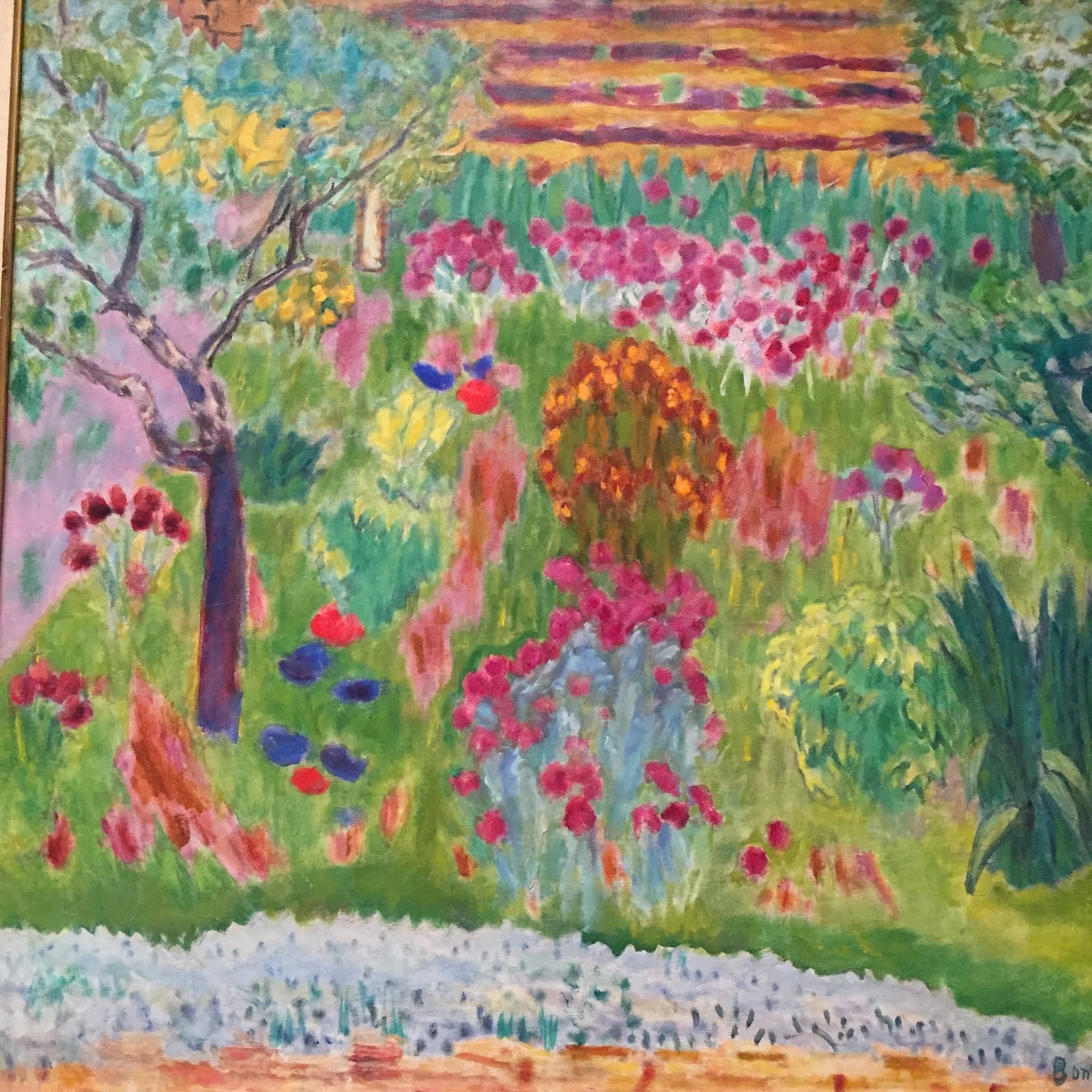
Pierre Bonnard, Garden, 1935

We know that disease is no respecter of persons.  A man whose wife was dying of cancer said to me, "I have enough money, enough friends, enough faith, but I can't save Carole."  They were a beautiful couple.  We'd known them a long time.  Then last year one of their grown sons lost his life to depression.  This kind of despair has been on my mind, and perhaps yours, because of two suicides--Kate Spade's (1962-2018) and Anthony Bourdain's (1956-2018).   No silver linings there, no "all for the best" or "everything has a reason." 

We each of us live with the specter of death, our own or that of someone we love.  And yet we live.  We love each other.  We care for each other.  We care for strangers.  We feel for others and put ourselves in their place. 

At book club the other day the friend who asked for prayers seemed to have found strength.  She is doing everything necessary to enjoy and prolong her life and lessen her pain.  She seems to be doing this with determination and a degree of peace.  Her wisdom has not failed her. Then a few days later she got unexpected news.  Another test showed that her disease has not progressed.  Our friend whose wife died, years ago now, is concentrating on his remaining family.  It grows every year.  Marriages, births. . .  I see peace and strength in him too.  I've read reader responses to the recent suicides--so many people describing their paths in and out of depression, such precious strangers living with this disease, sharing their pain, staying the course.  

I expect God to ready me when it is my time.  So far when I have asked for help and guidance it has been given.  My problems are as bad as anyone's--early deaths, family mental illness, shocks--but I do believe I have been given what in our church's liturgy is called "the peace that passes all understanding."  To me this means that there are facts that should destroy peace but haven't. My life has joy. I expect yours does too.  

My mother, Nina Naomi, was not particularly religious.  Although she loved God she did not attend any church.  When her time came, after one round of chemo she refused another.  She faced death with peace and strength.  Most of us are facing lesser trials than the end of life. But strength and peace are always worth asking for.  That's what I learned from her.  We can give up on many things but not the quest for peace.  

Edouard Vuillard, A Seamstress, 1892


Thursday, June 14, 2018

CONTENTMENT DOESN'T FALL IN OUR LAPS. LIKE A GARDEN IT HAS TO BE CULTIVATED.


When I opened up an issue of The Simple Things (thesimplethings@icebergpress.co.uk) I saw this page and it triggered this thought about contentment.  So I scribbled the thought on the page.  Shortbread, tea, a lovely book of old-fashioned nature sketches.  How nice to be contented by such simple things.  And how grateful we must be if we have the time for tea, a biscuit and a read. We know that there are lives all over the world where events makes it hard to make a happy home or embrace the ordinary.  We know that if we have the time to read and blog and care for our families and do yoga and play sports and our work is satisfying that we are very, very fortunate.  We hope and pray that our contentment isn't at the expense of others.  That we are thoughtful, charitable, pay fair wages, vote our consciences, work for worthy causes.

Not all phrases we encounter make as much sense.  I recently came across the admonition, "Enjoy life while you're living it."  This struck me as nonsensical.  Why not just "Enjoy Life?" Except that is too simplistic.  What if we have been uprooted?  Or worry about those who have?  What if someone we love seems distant?  Or a child is floundering. What if a friend has cancer? Or we're afraid of aging? Or dying.  Such common problems.  Then it seems to make more sense to cultivate contentment.  Work at it.  Someone said, and I don't know who, "A wise woman takes care of her soul."  This made me think that the greatest contentment comes from emotional safety. Shutting our door at night and feeling comfortable in our solitude.  Or getting into bed with the person we love.  Waking and our sweet pet is there waiting for attention and food.  Being alone but not lonely.  Or with people and not lonely.  Or family and not lonely. Helping when we can and accepting when we cannot.

I was thinking about feelings that slow us down--envy, fear, anxiety, jealousy, fatigue, frustration. . . .   Then how we want to feel--at peace,  loved, appreciated, free, treasured, secure, rested, energized, smart, successful. . . . long lists.  Both lists are legitimate.  They are real and have real, undeniable causes.  Sometimes circumstances must change before we move from feeling anxious to feeling appreciated.  If we are being deceived the deception must stop.  If someone who owes us loyalty is disloyal they must change.  If we are afraid to take action, we must change.  Whatever hurts anyone must stop. 

When gardens are cultivated beautiful flowers grow.  So it's true--contentment doesn't fall into our laps.  It does have to be cultivated.  I bet we are all brave and strong enough to do that.  I bet we are doing that now.  With affection, Nina Naomi

Pierre Bonnard, "Garden," 1935


Tuesday, June 12, 2018

"SHOW UP, BE KIND, LEARN, REPEAT," FRIDA KAHLO


Flow (www.flowmagazine.com), a magazine that I like, has a cover that reads:  
SHOW UP
BE KIND
LEARN
REPEAT

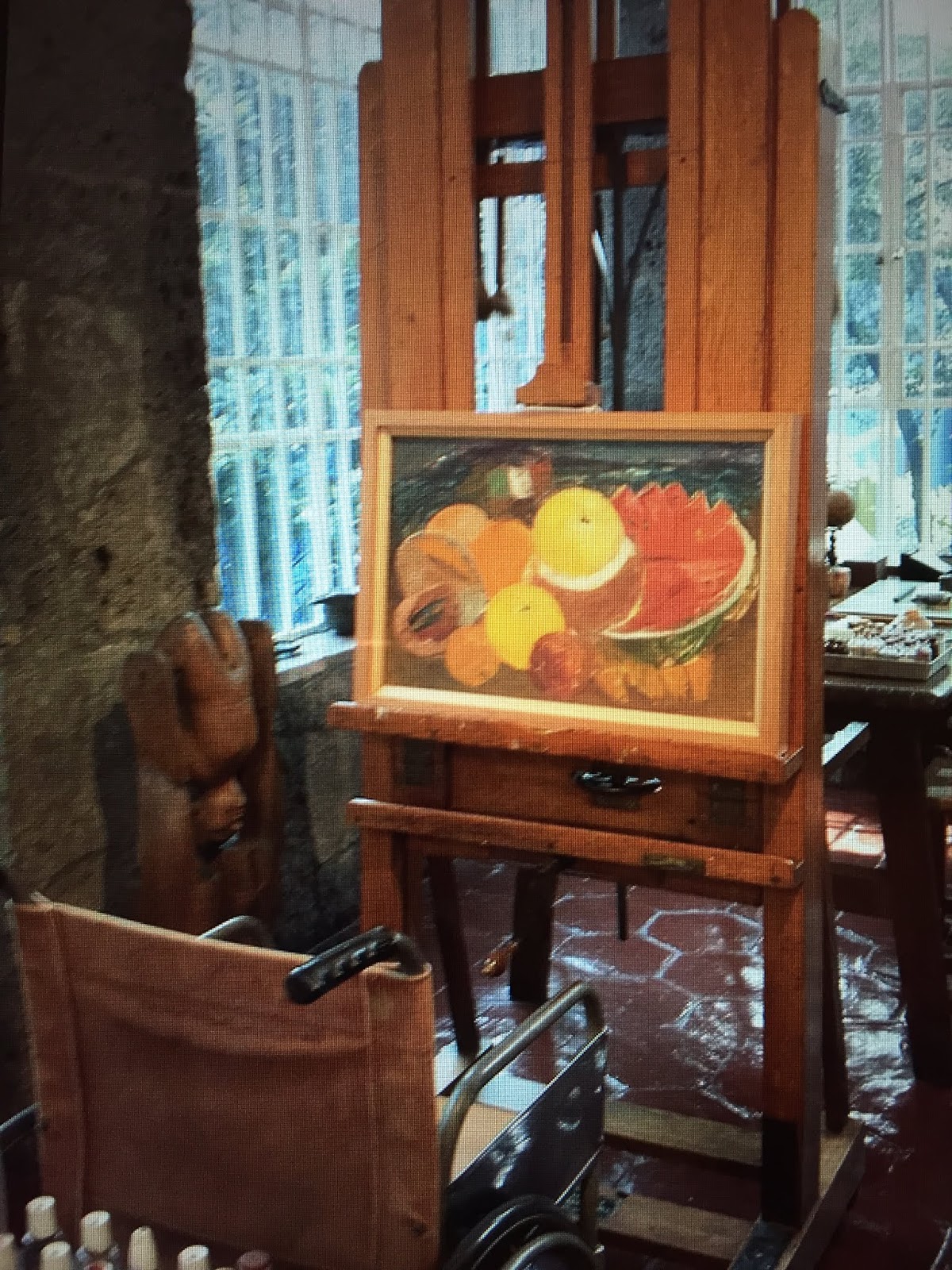
The words are by Frida Kahlo (1907-1954). What a wonderful life motto. It's not enough on its own of course. There are situations when the path is not so straightforward that to simply show up and be kind is sufficient.  She knew that.  From polio and a bus accident, she lived with pain.  But it never hurts, does it, to show up and be kind?  I bet most of us do that already.  When this motto is part of our lives, surely we are better people.  I would like to visit the blue house where she lived.  It is now a museum.   

La Casa Azul, Coyoacan, Mexico City

Many of us know Frida Kahlo as a painter of self-portraits and works inspired by nature and Mexican artifacts.  And as the wife of the muralist Diego Rivera.  She said, "I paint self-portraits because I am so often alone and because I am the person I know best."  Isn't that beautiful and brave?  Doesn't it combine the pleasure and pain of aloneness?  


But she also was a diarist and her letters, poems and notes have been published.  I like a passage by her that reads more like poetry than prose: 

I USED TO THINK I WAS THE STRANGEST PERSON IN THE WORLD
BUT THEN I THOUGHT THERE ARE SO MANY PEOPLE IN THE WORLD,
THERE MUST BE SOMEONE JUST LIKE ME
WHO FEELS BIZARRE AND FLAWED IN THE SAME WAYS I DO.
I WOULD IMAGINE HER, AND IMAGINE THAT SHE
MUST BE OUT THERE THINKING OF ME, TOO.
WELL, I HOPE THAT IF YOU ARE OUT THERE AND READ THIS
AND KNOW THAT, YES, IT'S TRUE I'M HERE,
AND I'M JUST AS STRANGE AS YOU. 

I don't know why exactly this interesting woman and artist thought she was strange.  Or why she thought of her strangeness as a flaw.  But I like that she is seeking connections.  That she believes in connections.  I love the idea that "there must be someone just like me." 
As her pain increased Kahlo painted from her wheelchair.  But she took her limitations in stride.  She said, "Feet, what do I need you for when I have wings to fly." Imagine that.  I wish we could all look at our limitations that way.


Kahlo did not like American "high society."  She said, "I feel a bit of rage against all these rich guys here, since I have seen thousands of people in the most terrible misery without anything to eat and with no place to sleep . . . it is terrifying to see the rich having parties day and night while thousands and thousands of people are dying of hunger." 

We don't have to be political to have some of those feelings.   Most of us try to use our money and time in an ethical way, keeping ourselves and our families healthy and strong, paying fair wages and helping others less fortunate.  That's part of being kind. I need to make time to study Frida Kahlo more.  Not as a chore but as something I will enjoy.  And her motto--that I will take to heart.  Thank you, interesting woman.  Nina Naomi